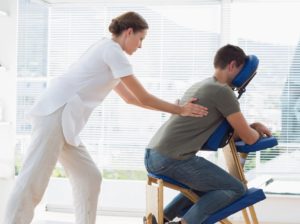
 How Corporate Massage Programs Reduce Absenteeism
Integrating Evidence from Academic Research and Workplace Case Studies
Corporate massage programs have evolved from a luxury perk to a core element of strategic wellness planning. As organizations face mounting challenges with attendance, burnout, and turnover, wellness interventions like on-site massage therapy have demonstrated measurable impacts on reducing absenteeism, improving mental health, and enhancing overall productivity.
- Understanding the Cost of Absenteeism
Absenteeism—defined as habitual, unscheduled absences beyond allowable leave—costs U.S. employers an estimated $225.8 billion annually, or roughly $1,685 per employee per year (Centers for Disease Control and Prevention, 2023). Beyond lost hours, absenteeism disrupts workflow, increases overtime costs, and undermines morale.
According to Harvard Business Review (2022), workplace disengagement and chronic stress are now among the top predictors of repeated absences, often leading to a cycle of stress, burnout, and further absenteeism.
- Stress: The Hidden Driver Behind Absence
Chronic stress is among the leading causes of unscheduled time off. The American Institute of Stress reports that 83% of workers experience job-related stress, and over half cite it as a major factor in missed workdays.
Massage therapy directly addresses this issue by reducing cortisol levels and stimulating parasympathetic activity—our body’s “rest and digest” system.
A 2020 randomized controlled trial in Frontiers in Psychology found that participants receiving weekly massages showed 32% lower cortisol levels and higher serotonin scores, correlating with improved attendance and focus (Uebelacker et al., 2020).
- Physical Health: Preventing Musculoskeletal-Related Absences
Office-based employees often suffer from musculoskeletal disorders (MSDs)—neck, shoulder, and lower back pain—caused by prolonged sitting and poor ergonomics.
A 2021 study in the Journal of Occupational Health found that employees receiving regular workplace chair massages reported a 40% reduction in self-reported pain and fewer sick days over 12 weeks compared to a control group.
Massage enhances circulation, relieves muscle tension, and prevents repetitive strain injuries, all of which can lead to chronic absences if unaddressed.
These physiological improvements often translate to less reliance on medical interventions and greater day-to-day comfort, helping employees remain present and productive.
- Mental Health & Emotional Resilience
Massage therapy’s benefits extend beyond the body.
Through the release of dopamine and serotonin, sessions contribute to improved mood stability, reduced anxiety, and lower depression symptoms—key factors influencing absenteeism.
In a 2022 survey by the American Massage Therapy Association (AMTA), 76% of corporate wellness participants reported fewer stress-related absences after three months of regular massage access.
Moreover, brief 15-minute chair massages have been shown to improve attentional focus and perceived calm—offering a rapid reset that counters burnout and emotional fatigue (Journal of Alternative and Complementary Medicine, 2019).
- Culture, Morale, and Retention
Organizations that integrate wellness practices signal that employee wellbeing is a core value, not a peripheral perk.
A Forbes Workplace Wellness Report (2023) noted that employees in firms offering consistent wellness programs—including on-site massage—were 23% more likely to describe themselves as “highly engaged” and 31% less likely to report absenteeism tied to disengagement.
The anticipation of a relaxing experience, coupled with improved workplace morale, fosters a positive emotional connection to the workplace. This effect not only reduces voluntary absenteeism but also increases retention and team cohesion.
- The ROI of Wellness
Evidence increasingly supports the business case for massage programs:
According to a meta-analysis published in the Journal of Occupational and Environmental Medicine (2021), every $1 invested in workplace wellness yields $3.27 in reduced healthcare costs and $2.73 in lowered absenteeism costs.
Thus, the ROI extends beyond morale—it’s a financially sound strategy.
- Implementing a Corporate Massage Program
Massage Arkansas has been involved in mobile workplace massage programs tailored to corporate settings for more than ten years. These services can be delivered in-office or at outdoor events, integrating seamlessly into existing wellness frameworks.
By providing stress relief, postural correction, and mental reset, such initiatives directly contribute to a more present, productive, and resilient workforce.
 Key Takeaway:
Corporate massage programs reduce absenteeism through stress regulation, pain prevention, improved morale, and enhanced engagement—yielding measurable returns for both employers and employees.